

When starting a new role, it is important that your employer provides essential training. However, going above and beyond the necessities, or even legal requirements, can enable a team to be more proactive, especially if an emergency occurs. Each member of the Absolute team is equipped with a wide array of training to allow them to conduct themselves appropriately, give a high level of domiciliary care, and make client and staff safety at the forefront of all operations.
Initial training can help a new employee learn about their role but shouldn’t be the only training given. At Absolute, we ensure each member of the team is given refresher training of both in-house and online education.
One of the most crucial reasons why healthcare training should be repeated is due to changes. These may come from the Health and Safety executives, official government law, the CQC, or simply to improve working practices.
Gaining and remaining compliance is vital for any reputable healthcare provider. This allows us to continue running and also ensures that we follow best practice. Our belief is that we shouldn’t try to aim for the bare minimum. Instead, our training is extensive and covers all aspects that Healthcare Assistants may face, whether that be now or in the future.
We can all forget things, especially over a long period of time. One of the benefits of refresher training is that it allows the team to figure out what has been correctly retained and which aspects of care need further education.
Refresher training is usually given on an annual basis, and records kept identifying whose training is close to expiring. There can also be some instances where we may ask a member of the team to come in sooner:
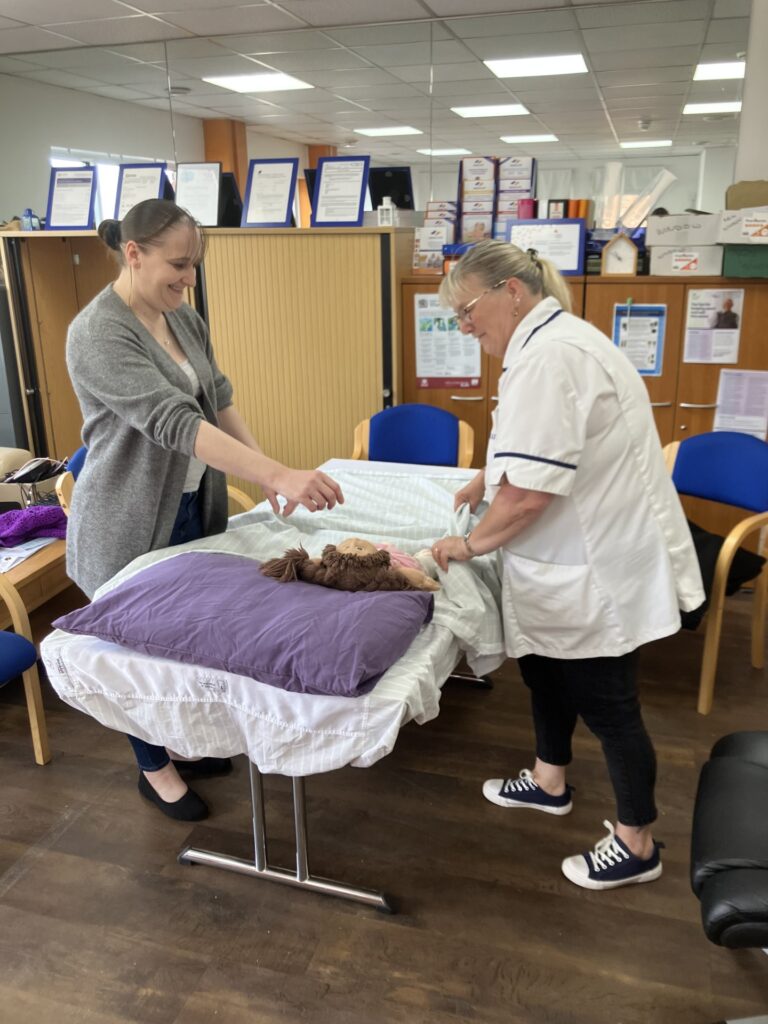
Compounding healthcare training in between official sessions is also vital for safety and success. We implement clinical skill checks on a regular basis for each member of the team. This usually takes place during their review meeting. For new Healthcare Assistants or other members of staff, this will occur weekly for the first month, then monthly until their probationary review when they have been with the company for three months. Past this, reviews are then held quarterly.
A clinical skills check consists of a written quiz on a designated subject. Individuals need to get a minimum of 80% correct to be deemed as a pass. Any incorrect answers are then discussed.
Should an employee not pass the quiz, they will be given a week to revise, and then a retest will take place. A second failure will result in training re-enrolment, as well as an investigation into why training has not been retained.
While this may sound like a long process, we have found it to be imperative to ensuring continuous and high-quality care. The investigation portion is not used to punish the individual, but instead to identify prospective training barriers, as well as ways we can improve future training sessions.
There are a number of providers of dedicated healthcare training throughout the UK. We often partner with Dementia Friendly Alton, who provide our Emergency First Aid at Work and Mental Health First Aid at Work training. Absolute offer training themselves for employees. Our trainers have undergone Train the Trainer or have extensive experience within the healthcare field and best working practices.
To find out more about how we can provide you with healthcare training as part of the employment process, or to apply, contact Absolute Healthcare Providers Ltd today.

Verity joined Absolute in February, 2025, as our HR & Recruitment Administrator.
With a background in HR, customer service, and marketing, she has taken the lead on crafting digital content.
Outside of work, Verity enjoys woodland walks, cooking, and video games.